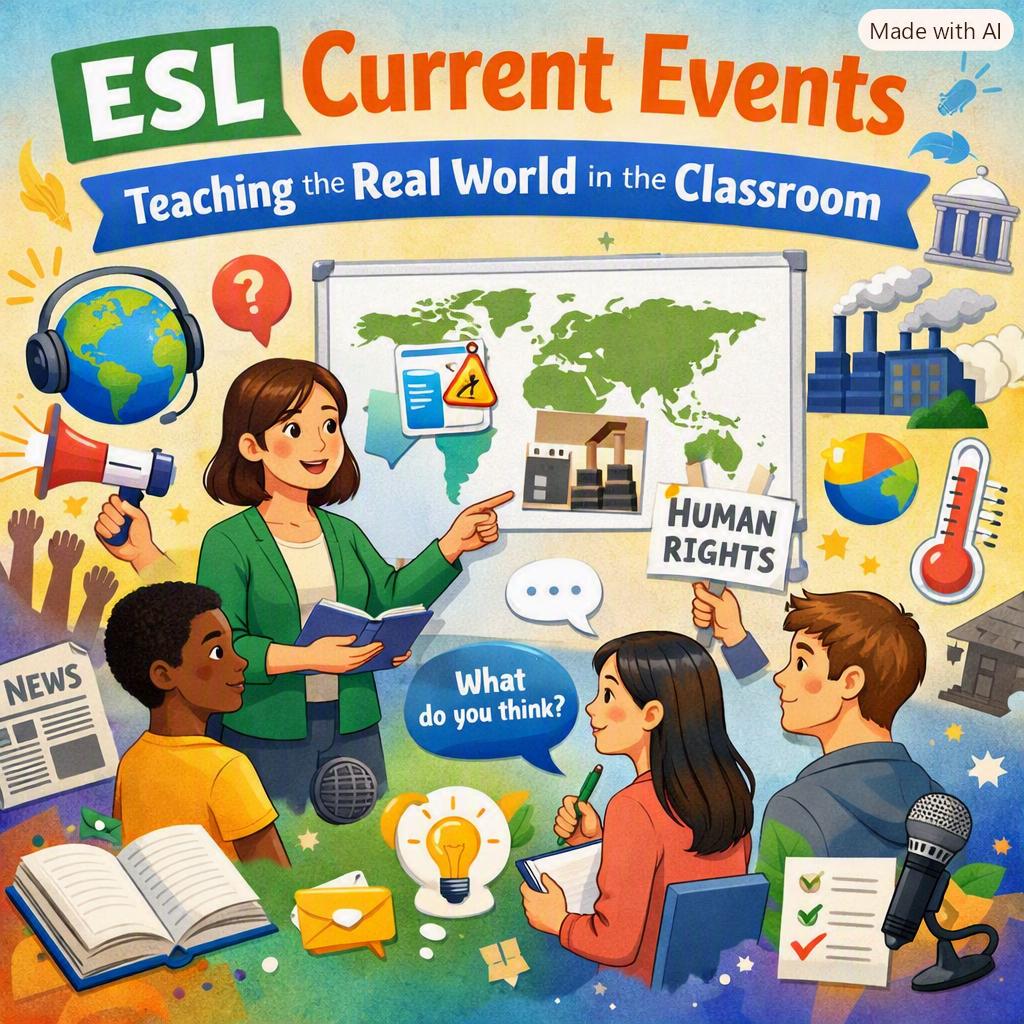
Teaching English isn’t just about grammar charts and vocabulary lists — it’s about helping learners understand the world they live in. And one of the most powerful ways to do that is by bringing current events into the ESL classroom.Whether it’s a global health issue, a political decision, or a story about environmental justice, real‑world news gives students something essential: language with purpose.
Why Current Events Belong in ESL Lessons
1. They make English meaningful
When students read or discuss real news, English stops being an abstract school subject and becomes a tool for understanding life. Learners connect language to issues that affect their families, communities, and futures.
2. They build critical thinking
Current events naturally spark questions:
- Why did this happen?
- Who is affected?
- What should be done?
These questions encourage students to analyze, compare, and evaluate — all high‑value skills for B1/B2 learners.
3. They expose students to authentic language
News articles, interviews, and reports introduce vocabulary and grammar structures that textbooks rarely cover. Students learn how English is used in real contexts: reporting, explaining, persuading, and debating.
4. They empower students to express opinions
Many ESL learners feel shy about sharing their views. Current events give them a clear topic and a reason to speak. Even simple opinion sentences (“I think…”, “In my country…”) build confidence.
How to Teach Current Events Effectively
Choose topics that matter
Pick stories that connect to universal themes: water access, public health, education, climate, technology, human rights. These topics work across cultures and levels.
Simplify without oversimplifying
Break the article into:
- a short summary
- key vocabulary
- a few guiding questions
This keeps the content accessible while preserving the meaning.
Use grammar to deepen understanding
Current events are perfect for teaching:
- modal verbs (should, must, have to)
- passive voice (the water was contaminated…)
- reported speech (the court said that…)
Grammar becomes a tool for expressing ideas, not just completing exercises.
Encourage respectful discussion
Set simple rules:
- listen actively
- disagree politely
- focus on ideas, not people
This creates a safe environment where students can explore complex topics.
A Recent Example: Water as a Human Right
A recent U.S. court decision ruled that there is no constitutional right to clean drinking water, even in a case where residents were misled about lead contamination. This kind of story is ideal for ESL lessons because it touches on health, justice, and government responsibility — themes students can relate to no matter where they live.It also opens the door to powerful questions:
- Should water be a human right?
- What responsibilities do governments have?
- How does unsafe water affect communities?
These questions help students practice English while developing global awareness.
Final Thoughts
Current events turn ESL lessons into something bigger: a space where language, culture, and critical thinking meet. When students learn English through real stories, they don’t just improve their skills — they become more informed, thoughtful, and empowered individuals.If you create ESL materials, teach classes, or run an online shop, integrating current events can make your lessons more engaging and your resources more valuable.